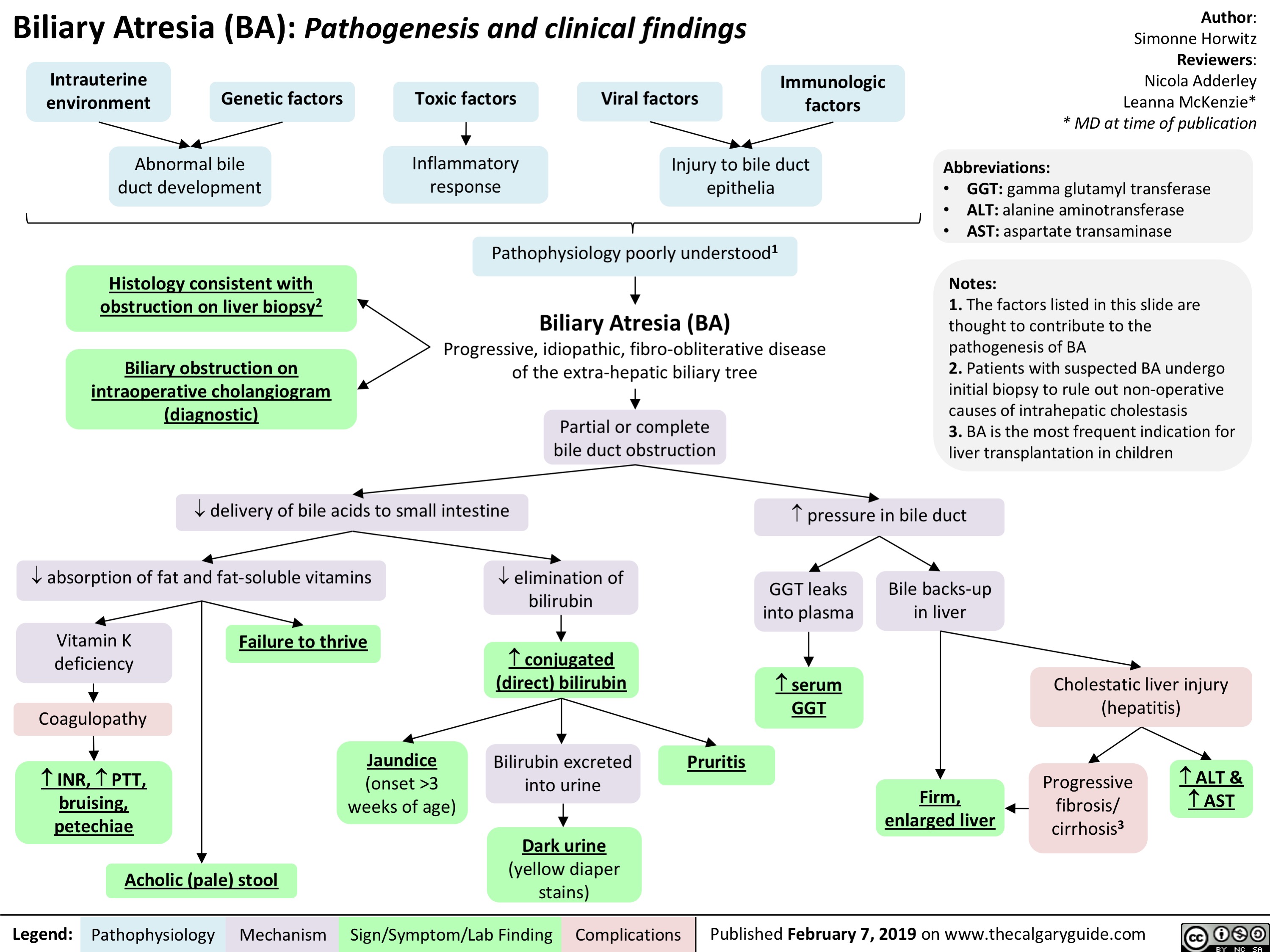
It is one of the most common causes of neonatal cholestasis often causing cirrhosis immediately and leading to death and accounts for over half of children who undergo liver transplantation. It is hypothesized that an event occurring during fetal life or at the time of birth may trigger the disease such as.

Bile can t flow into the intestine so bile builds up in the liver and damages it.

Pathophysiology of biliary atresia. Although histopathologic features of biliary atresia have been extensively studied in surgical specimens from excised extrahepatic biliary systems of infants undergoing portoenterostomy the. The causes of biliary atresia are not well understood. Cells within the liver produce liquid called bile.
Bile helps to digest fat. Infants often have jaundice in the first 2 weeks of life so it is not easy to identify biliary atresia in newborn infants. Biliary atresia is a rare disease of the liver and bile ducts that occurs in infants.
Biliary atresia is a serious liver disorder that occurs before or shortly after birth when a baby s bile ducts the tubes that carry bile from the liver become blocked. When blocked ducts prevent bile from being excreted the liver becomes damaged. Indeed there have been cases of identical twins where only one child has the disease.
Infants with biliary atresia typically develop jaundice by 3 to 6 weeks of age. Biliary atresia biliary atresia is a disorder of infants in which there is obliteration or discontinuity of the extrahepatic biliary system resulting in obstruction of bile flow. Biliary atresia ba is a devastating obliterative cholangiopathy that affects exclusively infants and is characterized by a progressive fibro inflammatory obstruction of the extrahepatic and intrahepatic bile ducts that can lead to cirrhosis and liver failure 1 4 ba occurs in 1 out of 15 000 births in the us affecting all ethnic groups and with a higher frequency in.
Biliary atresia ba is a congenital biliary disorder which is characterized by an absence or severe deficiency of the extrahepatic biliary tree. Biliary atresia is not an inherited disease and does not run in families. The damage leads to scarring loss of liver tissue and function and cirrhosis.
Symptoms of the disease appear or develop about two to eight weeks after birth. Bile is a substance that is made and released by the liver. Biliary atresia is a condition in infants in which the bile ducts outside and inside the liver are scarred and blocked.
Biliary atresia is a condition in newborn babies in which bile is blocked from moving from the liver to the small intestine. Untreated the resulting cholestasis leads to progressive conjugated hyperbilirubinemia cirrhosis and hepatic failure. Stools change color because bilirubin is not reaching the intestines and passing out of the body in the stool.
From the liver it moves through a network of tube like structures called bile ducts to the small intestine where it helps the body break down and absorb food. Jaundice that lasts beyond 3 weeks of age may be the first sign of biliary atresia. The body needs bile to aid digestion and carry wastes from the liver out of the body.
Infants with biliary atresia may also have pale yellow gray or white stools.
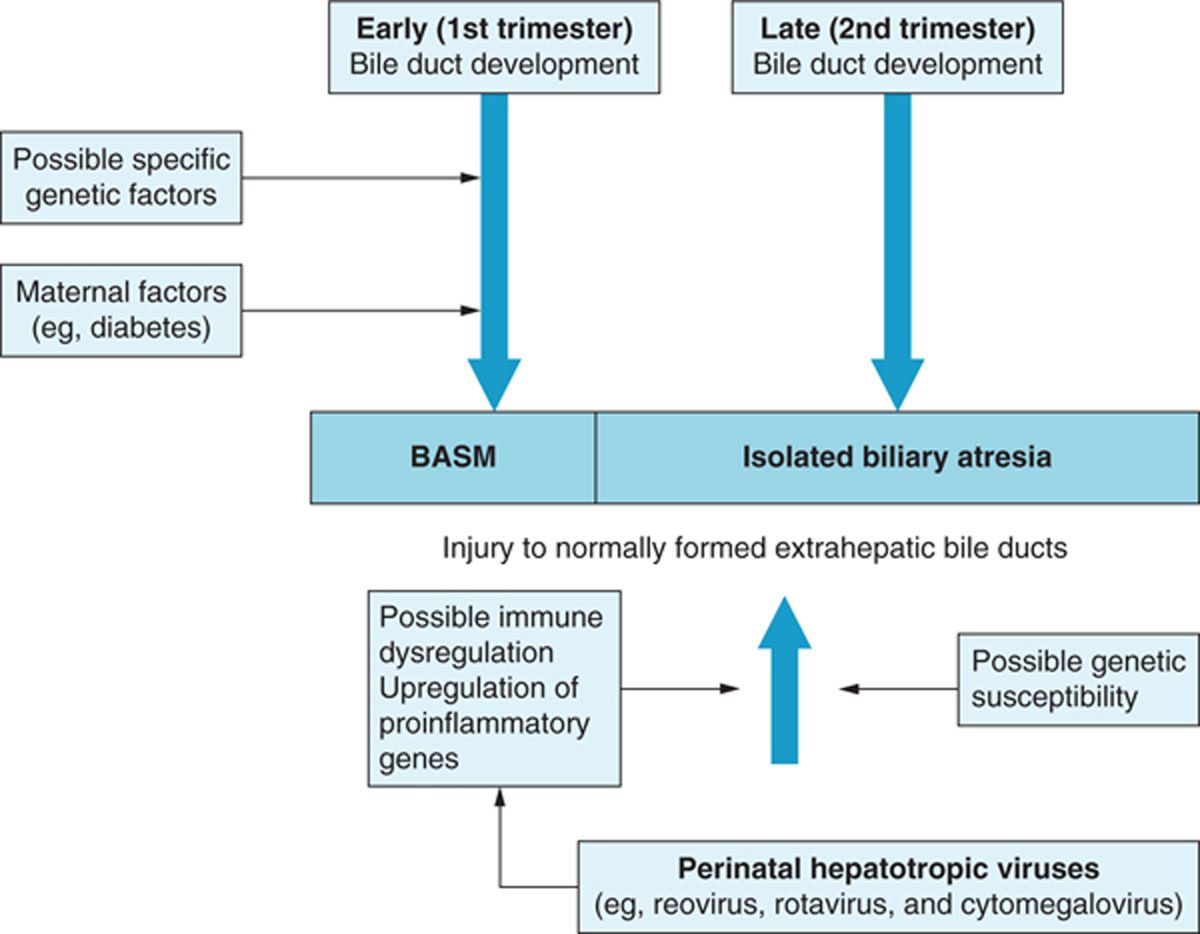 Biliary Tract Anomalies Obgyn Key
 Extrahepatic Biliary Atresia Current Concepts And Future Directions
Biliary Atresia Sciencedirect
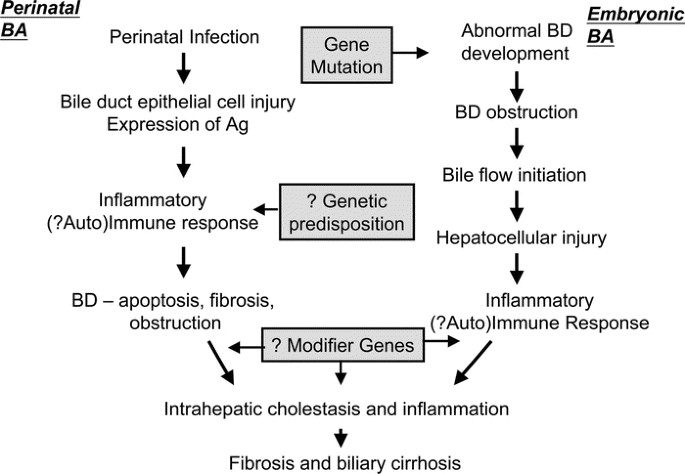 Unraveling The Pathogenesis And Etiology Of Biliary Atresia Pediatric Research

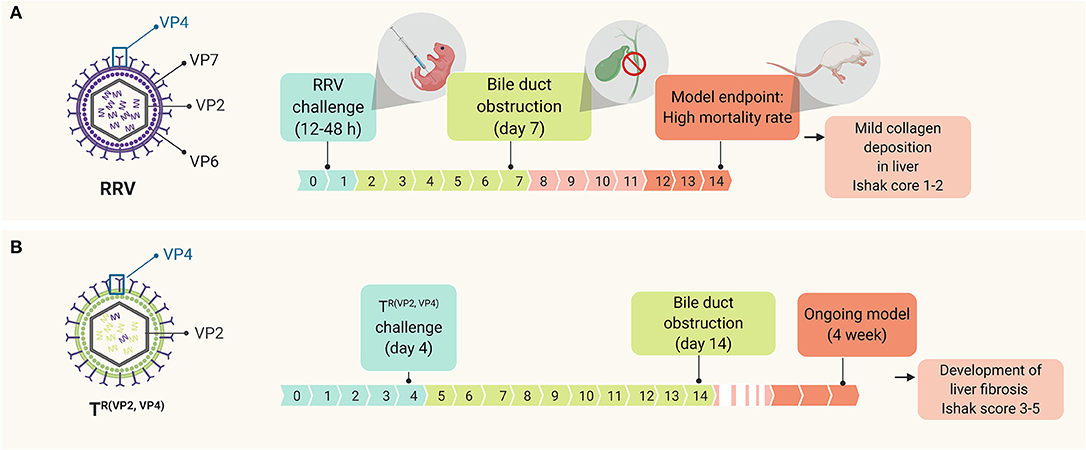 Frontiers Innate Immunity And Pathogenesis Of Biliary Atresia Immunology
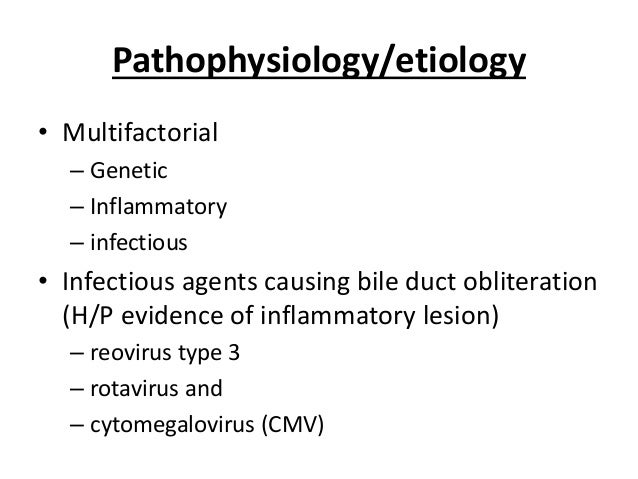 Biliary Atresia
 Biliary Atresia And Other Cholestatic Childhood Diseases Advances And Future Challenges Sciencedirect
 Clues To The Etiology Of Bile Duct Injury In Biliary Atresia Semantic Scholar
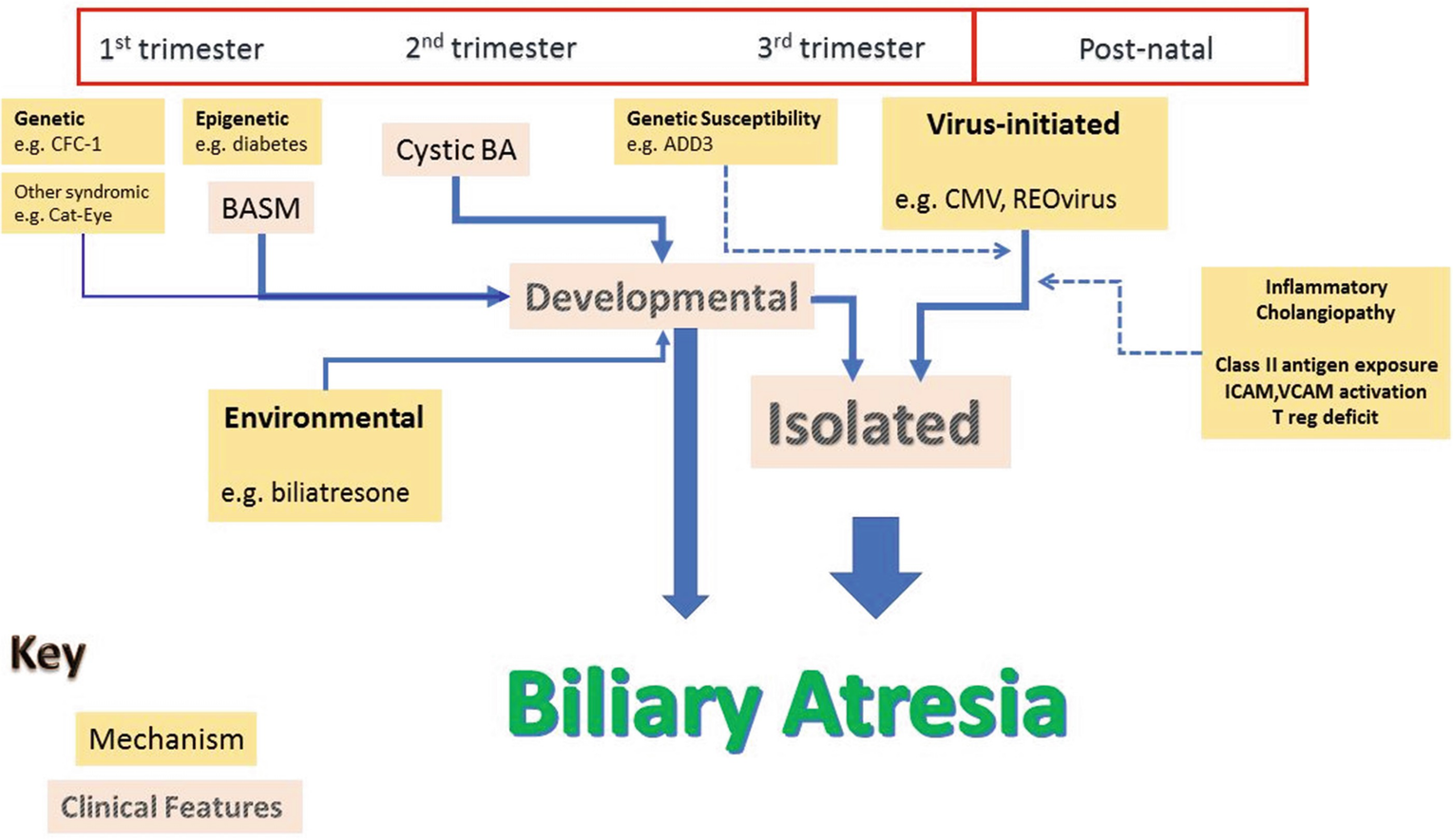 Biliary Atresia And Other Congenital Disorders Of The Extrahepatic Biliary Tree Springerlink
 54897782 Pathophysiology Biliary Atresia Docx Pathophysiology Biliary Atresia Predisposing Factors Race Asian Sex Female Age Neonate Immaturity Of Course Hero
 Patterns Of Clinical Biliary Atresia Download Scientific Diagram
 Biliary Atresia Pediatrics Msd Manual Professional Edition