The body compensates for the decreased cardiac output by pumping faster than normal resulting in tachycardia. The symptoms of hypovolemic shock vary with the severity of the fluid or blood loss.
 Shock Hypovolemic Septic And Neurogenic
Treatment includes stopping bleeding intravenous fluid infusion oxygen and drugs.

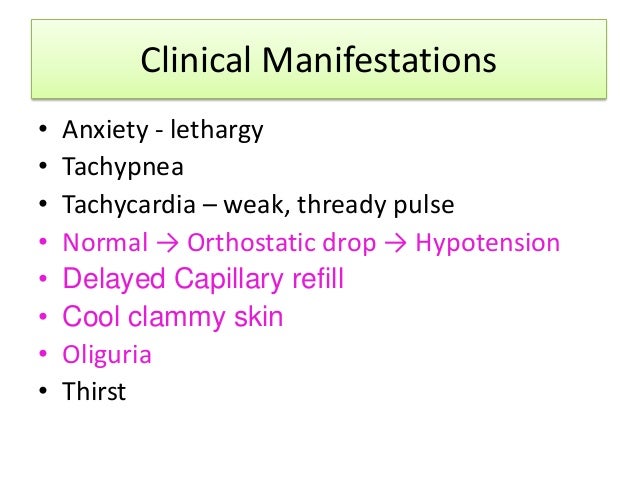
Signs and symptoms hypovolemic shock. Hypovolemic shock requires early recognition of signs and symptoms. Instead symptoms tend to arise only when you re already experiencing shock. The patient experiences decreased sensorium.
This stage can be difficult to diagnose. Preload manifestations in hypovolemic shock these assessments highlight that the tank is empty. A physical examination can reveal signs of shock such as low blood pressure and rapid heartbeat.
With an injury the most obvious sign of hypovolemic shock is a lot of bleeding. Hypovolemic shock produces hypotension with narrowed pulse pressure. Typical symptoms and signs.
There is no early warning signs for hypovolemic shock. However all symptoms of shock are life threatening and need emergency medical treatment. Hemorrhagic shock is hypovolemic shock caused by bleeding.
During the earliest stage of hypovolemic shock a person with will have lost up to 15 percent or 750 ml of their blood volume. Blood pressure pulse and breathing will be checked. The symptoms will only show once you are in the hypovolemic state.
What are the signs and symptoms of hypovolemic shock it all comes back to the tank preload pump contractility and pipes afterload. But you won t see it when the bleeding is happening inside your body because of an aortic aneurysm organ damage or. A person does not look right is anxious has pale cool and sweaty skin and weak pulse is lethargic and may lose consciousness.
To diagnose the condition a thorough physical examination should be done.